Should I still use Express.js in 2025?
Loading...
Loading...


Join JS Mastery Pro to apply what you learned today through real-world builds, weekly challenges, and a community of developers working toward the same goal.
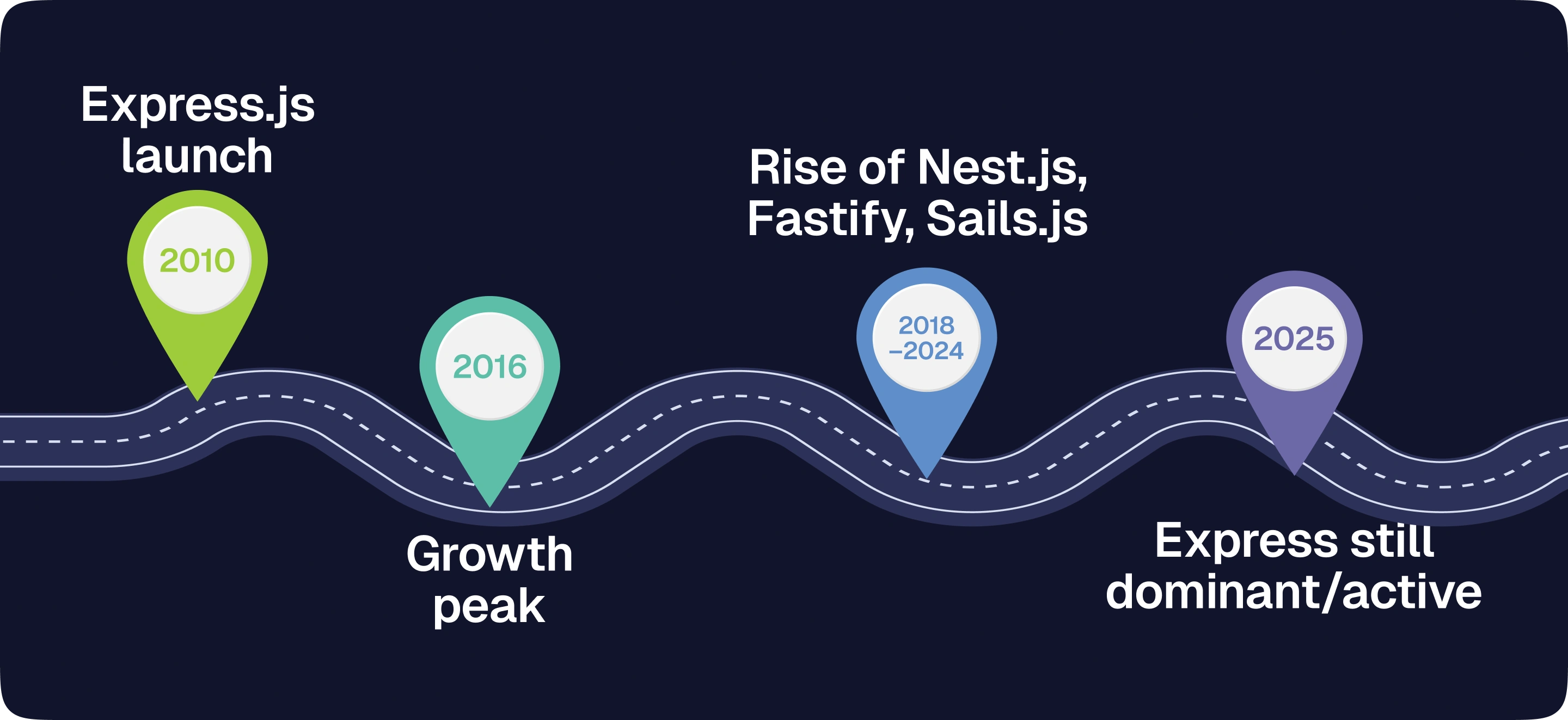
We’ve all been asking that question for some time now already, with the emergence of tools such as Nest.js, Fastify, Sails.js. But, before answering the question, we have to explain the the ecosystem where Express.js fits in.
Express.js was created in 2010 as a lightweight web framework for Node.js, making it easier to handle routing and middleware. It quickly became the most popular Node.js framework and today, despite newer frameworks emerging, Express remains a dominant choice for building APIs.
That's it… I said “short history” didn’t I?
Express.js has stood the test of time as the simple powerhouse of Node.js. What’s more, it's thrived, powering everything from small APIs to big boy applications at companies like Uber, IBM, and Accenture. Unlike heavier frameworks that are highly opinionated, Express gives you just enough routing, middleware, and request-handling tools to build without the hand-holding. Want a quick REST API? A few lines of code, and you're Gucci 👌
This approach lets developers focus on the main logic instead of repetitive setup, making it great for quick prototypes and MVPs. In the sea of microservices and Serverless architectures, where speed to market is everything (chances are there is already a team of cracked devs working on your project idea already), low overhead means you can iterate fast without sacrificing performance.
But what truly makes it a viable solution even today is: community and maturity.
With packages and middleware for every possible need, still being maintained by the community, Express isn't reinventing the wheel, it's the wheel everyone has a spare of. Trends like type safe stacks and edge computing are growing, but this ol’ baby keeps up.
New plugins for async patterns and ES modules help it stay current without needing a full rewrite.
Speaking of leveling up with Express in real-world enterprise setups, I'm putting together a backend course that dives deep into using it for scalable APIs and microservices at places like big tech firms. It's all about practical, production-ready skills - no fuzz. Join the waitlist here if you're ready to turn Express knowledge into enterprise wins!”

TLDR; It's evolving to stay relevant in a Node.js ecosystem.
While the core remains the same, changes happen on the outside, in a form of better tooling, new middleware and plugins, integrations…One big improvement is that Express now plays nicer with ES modules, thanks to Node.js updated ESM handling, so no more awkward CommonJS hacks for your imports. I know, I know, hard to believe they have finally got up to date with that 🤣
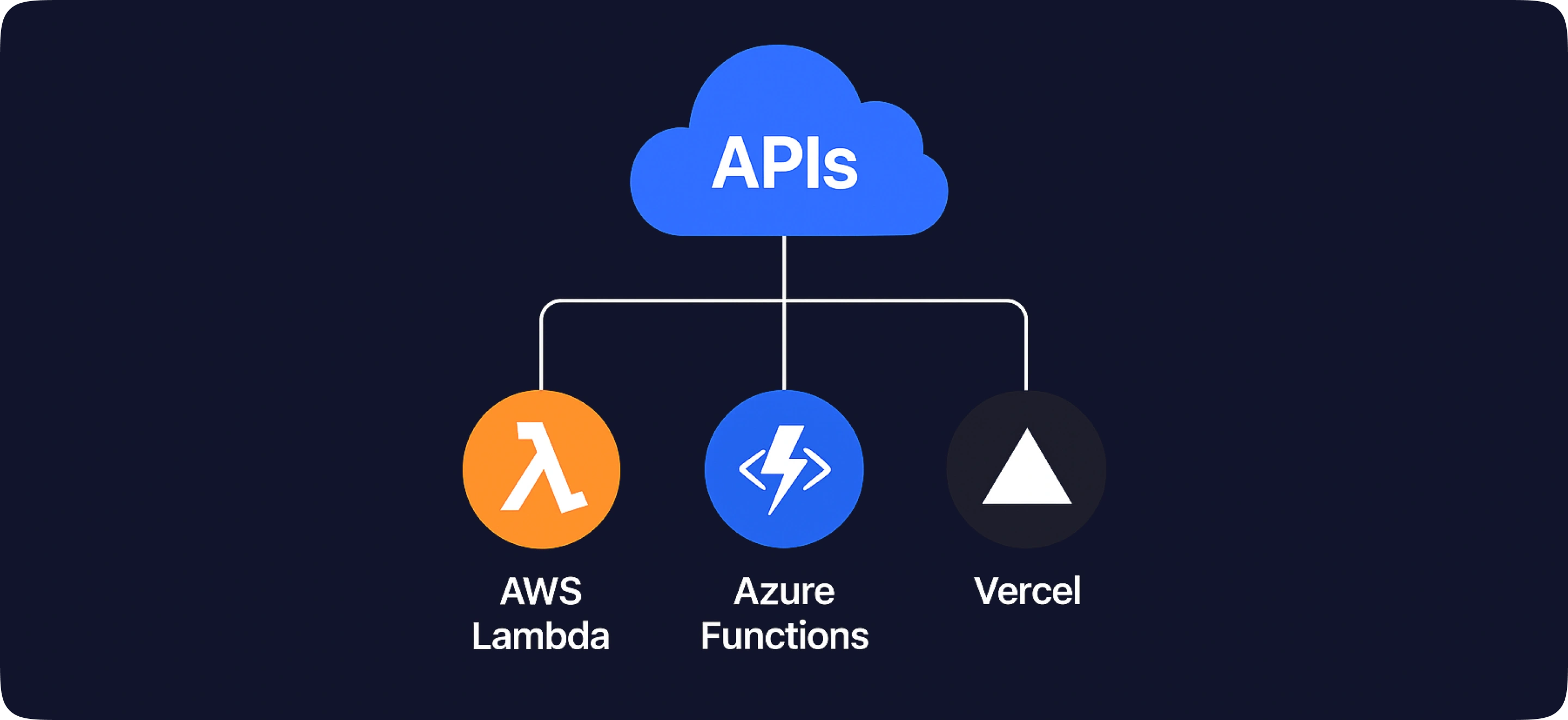
Error handling in async routes is now more robust, reducing boilerplate and letting you focus on logic. If you're building APIs for horizontal scale, these updates mean fewer gotchas in production environments like AWS Lambda or Azure. 2025 brings stronger security as well.
The Express Security Working Group (that is a long name indeed) has pushed for automatic integration prompts with tools like Helmet, which now has built-in defenses against new threats like supply-chain attacks in npm packages (if you think that is no biggy, read this).
Community plugins, such as express-rate-limit, incorporate AI-assisted rate limiting to combat bots and DDoS attempts smarter and faster.
Moreover, it is the Express integration into trendy tools like Next.js API routes that use Express under the hood, or integrations with tRPC for type-safe APIs.
For edge computing hypemen, Express now has experimental adapters for platforms like Cloudflare Workers and Bun, halving the cold-start times.

With all that said, Express.js isn’t making these moves over night, the process of updating is slow, but it is steady and stable. That fact allows devs to easily update their packages, teams can integrate it into their systems without breaking change every single month and every update is meticulously thought out!

While Express.js simplicity is its superpower, that minimalism can feel like a double-edged sword…As projects grow further from prototypes, "unopinionated" nature often demands you build from scratch what other frameworks provide out of the box. This causes several problems that make developers want to leave or switch to modern options. I know I have been praising the Express.js as this GOD TIER solution up until now, but it has its drawbacks:
The learning curve for maintenance: Express doesn't enforce structure, so spaghetti code lurks around
While middleware like Helmet helps, Express lacks native protections against common pitfalls ⇒ 2024 OWASP report highlighted that 40% of Node.js breaches involved misconfigured Express routers
I can go on for a bit, but you get the point. It’s weaknesses also seem to be it’s upsides.

So…after unpacking it, the simplicity, stability, use-cases,…in a word: Yes - it's still a smart choice for many developers, but not for all. The framework's works best in scenarios demanding quick iteration and flexibility, like building APIs, prototyping, or even maintaining legacy systems where familiarity beats “modernization”. If your project prioritizes developer velocity over “opinions” or bleeding-edge performance, stick with it! In the end, web dev is about the right tool for the job, not chasing trends.
Before we wrap this up, if learning Express for enterprise environments sounds like your jam, think about that upcoming backend course that I mentioned earlier. Hands-on project, security tips, and architecture strategies included.
Get on the waitlist today!
Benchmarks sometimes show it lagging behind leaner options ⇒ a simple JSON response benchmark clocked Express at ~15k requests/sec, versus 25k+ for Fastify
npm's explosion (over 2 million packages), sifting through deprecated or vulnerable middleware is a chore
NestJS caters to enterprise needs with its Angular-inspired decorators, it supports WebSockets, GraphQL, and microservices natively